Who flies it
A construction background, then a camera that can prove what a storm did
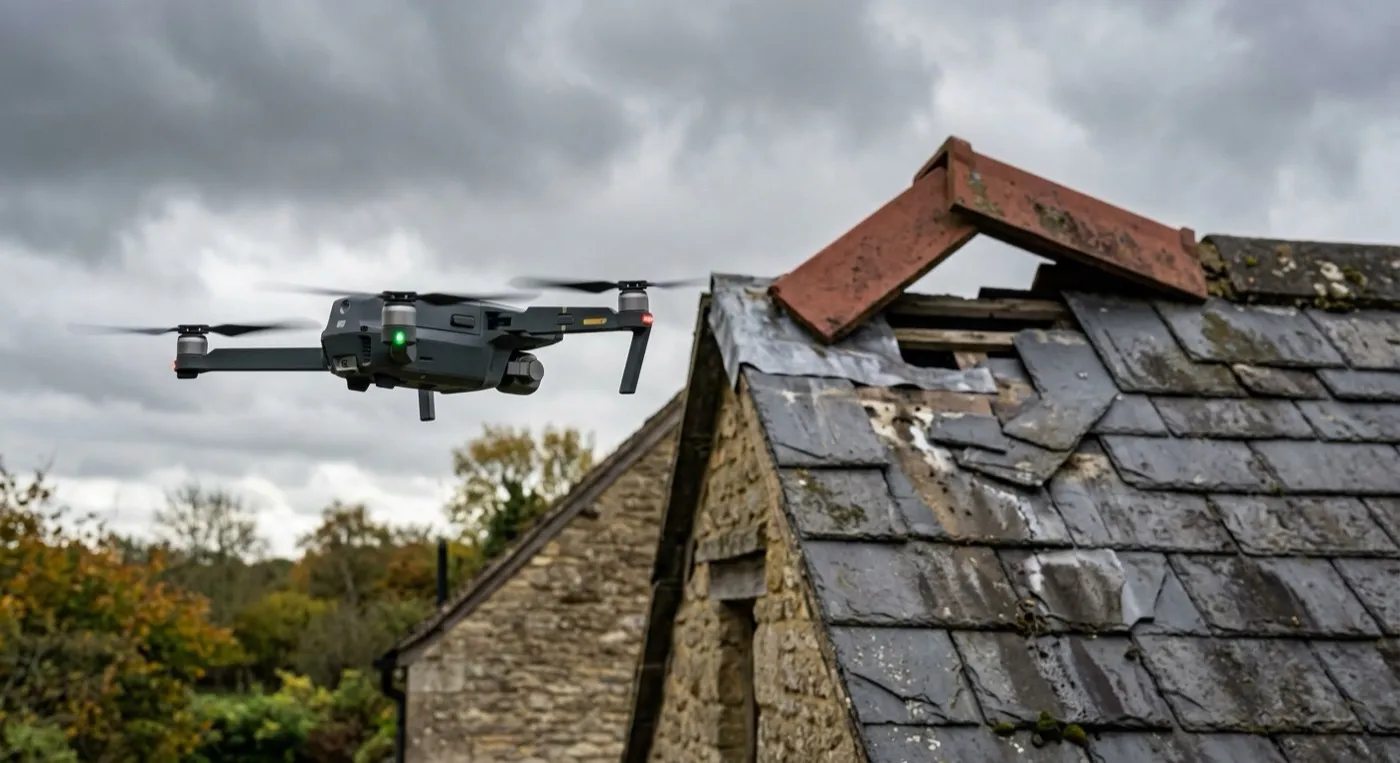
Why claim evidence ended up being part of the job
The background is construction rather than insurance, which turns out to matter for this specific job. Knowing what a torn felt edge on a flat roof actually means, or why a ridge tile lets go on one slope and not the other in a given wind direction, is the difference between a set of aerial photographs and a pack that a loss adjuster can read and act on.
The work grew directly out of flying general roof surveys for Devon homeowners and landlords. Storm damage kept being the reason people got in touch, and it became clear the file people actually needed after a storm was a different shape to a routine condition survey: dated, referenced to one event, and built to be handed straight to an insurer rather than kept for the owner's own records.
Everything is flown from Exeter, which puts most of Devon inside an hour after a storm has cleared and a good part of Cornwall, Somerset and Dorset inside two. Being local matters here specifically because storm damage needs recording fast, before the next front comes through and moves the evidence again.
On the record
Registrations, kit and cover
CAA registered
Operator ID and Flyer ID held, plus the A2 Certificate of Competency. Registration and insurance details go over with the pack as a matter of course, because most adjusters and agents need both on file before they can act on it.
100 megapixel camera
A DJI Mavic 4 Pro with a Hasselblad camera and 6K video. The resolution is what lets a single slate or a torn edge of felt be cropped into and still hold together, which matters when a photograph is the evidence.
Radiometric thermal
A DJI Mavic 2 Enterprise Advanced carrying a 640 by 512 thermal camera, used where water may already be tracking into the structure through storm damage and needs tracing rather than guessing at.
Insured with Coverdrone
Full commercial cover for the operation. A certificate is supplied with the pack without anyone having to chase for it, which is usually one of the first things a loss adjuster or managing agent asks for.
DJI Mavic 4 Pro
100 megapixel Hasselblad camera and 6K video. Enough resolution to crop into a single slipped slate or a torn lap seam and still hold together on screen, which matters when a photograph is the evidence.
DJI Mavic 2 Enterprise Advanced
640 by 512 radiometric thermal camera alongside the visual one. Used where storm water may already be tracking into the roof structure and needs tracing rather than guessing at.
How we work
Three things this pack will not do
Decide the claim
The pack is evidence, not a verdict. It records what is there, dated and referenced, and leaves the assessment to the insurer or loss adjuster who is actually deciding the claim.
Overstate what a photograph proves
A flown pack shows the visible condition of the roof on the day it was flown. Where something cannot be judged from the air, such as the extent of water ingress inside the structure, the pack says so rather than implying more than the photograph can support.
Fly a job that will not hold up
Wrong wind, wrong light, storm conditions still running: the flight moves rather than producing imagery too unstable to be useful evidence. A pack that would not survive being checked is worse than a short delay.
Call now
Book a claim inspection with Storm Damage Roof Inspection
Tell us the address and what you need looking at. Sam Hembury will come back with a fixed price and the next available slot.