Storm Damage Roof Inspection
Storm Damage Evidence Pack
A dated, photographed record of storm damage to a roof, flown fast while the damage is fresh and referenced so an insurer or loss adjuster can act on it without a second visit.
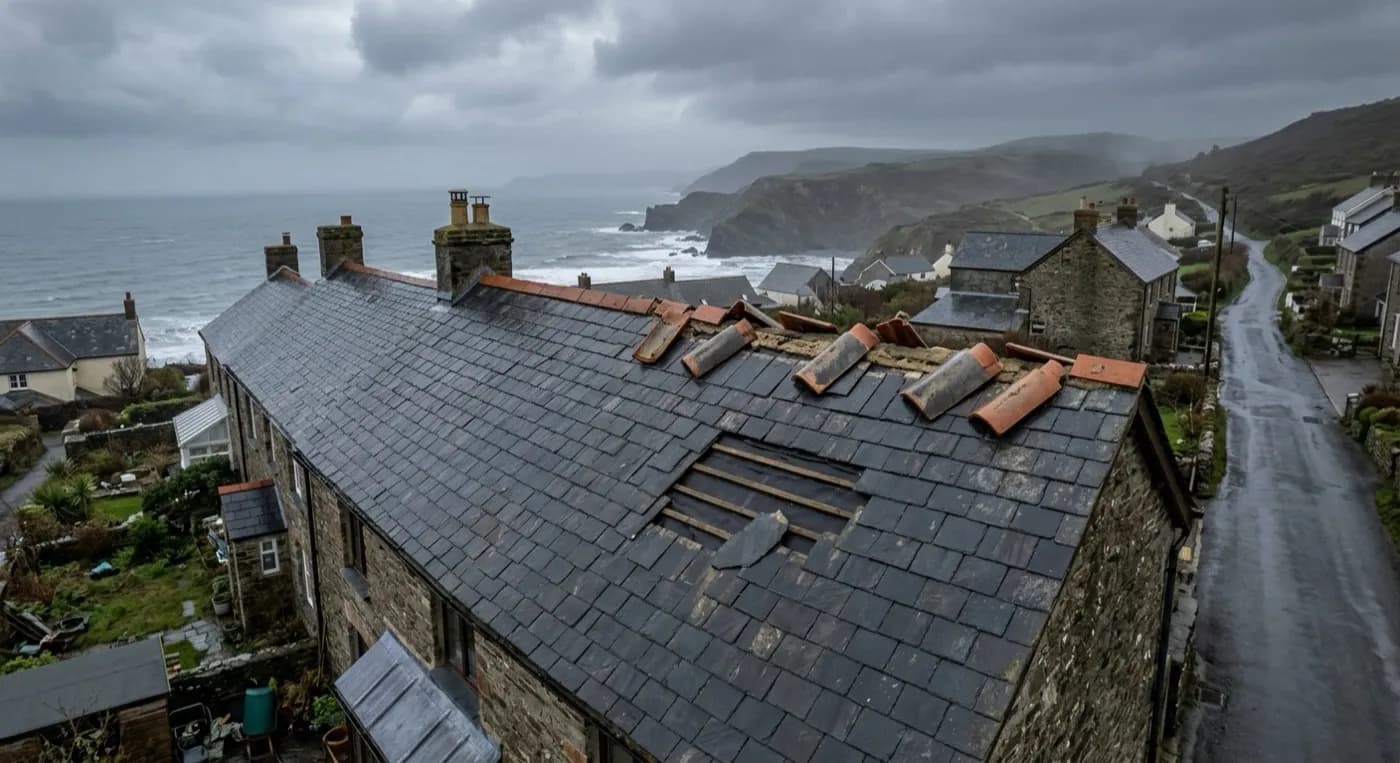
After a storm the roof is the part of the building nobody can safely check themselves, and it is usually where the damage is. Ridge tiles lift, hips slip, lead flashing peels back, felt tears on a flat section, and none of it is visible from a ladder propped against the gutter, if a ladder should be going up in that wind at all.
What an insurer or a loss adjuster actually needs is not an opinion, it is a record: what is damaged, where it is, when it was photographed, and how it relates to the storm being claimed for. A flown survey produces exactly that, at a resolution that holds up when someone crops into a single slate.
This is not a repair quote and it is not a structural assessment. It is the evidence that gets a claim moving, put together in a format built to be read once and acted on.
What is included
- Every visible area of storm-affected roof photographed at 100 megapixels
- Overview images per elevation plus close, referenced detail on each item found
- A written note against each item: what it is, where it is, and what it suggests about how it happened
- The date of the flight recorded against the imagery, so the pack ties to a point in time rather than a vague description
- Full resolution originals, so an adjuster or a roofer can zoom in for themselves rather than trusting a compressed copy
- A short summary page an adjuster can read first, with the detail behind it for anyone who wants to check it
How the pack is dated and referenced
Every image in the pack carries the date the flight was made, and the pack itself states plainly when it was flown and against which reported storm or storm dates it relates to, where that has been given. That matters because an insurer's first question after storm damage is rarely whether the damage exists, it is whether it happened when the policyholder says it did.
Each finding in the pack is given a short reference (a location on the roof, a compass-style position or a plain description such as 'ridge, rear slope, ridge tile three from the chimney') so a phone call between a loss adjuster and a roofer can refer to 'item four' rather than a description that means something different to each of them.
The full resolution originals are kept alongside the finished pack, so if a question comes up six weeks into a claim about a detail nobody focused on at the time, the image is still there to go back to.
What a sample pack actually looks like
A summary page first: the address, the flight date, the storm being referenced, and a short list of what was found with how serious each item looks. That is the page an adjuster reads in the first thirty seconds.
Then the overview images, one per roof elevation, so the whole roof can be understood before anyone looks at a single defect in isolation. After that, each finding gets its own referenced entry: a wide photograph showing where it sits on the roof, a close photograph of the damage itself, and a plain written note.
It closes with the full resolution image set as a separate folder, so nothing in the summary is the only copy of the evidence.
Why the flight has to happen fast
A slipped ridge tile in a gale can shift again in the next blow, a torn felt edge can peel back further within days, and moss and debris that settle over a lifted flashing make it harder to photograph clearly a fortnight later than it would have been the day after the storm.
There is also the practical point that most insurers want to see the damage in the state the storm left it, not the state it is in after several more weeks of weather have had a go at it. Booking the flight promptly is part of what makes the evidence worth having.
Where the roof needs a temporary tarpaulin or a make-safe before a flight can happen, the pack still records the state found and notes what has since been covered, rather than pretending the make-safe never happened.
On the day
How the evidence pack works
- Step 1
Tell us what happened
The address, roughly when the storm hit, and what you have noticed. A photograph of any ceiling stain or debris in the garden is useful even though it is not the roof itself.
- Step 2
Site and airspace check
The address is checked for airspace restrictions and a lawful launch point before a date is confirmed, so nothing gets discovered on the morning of the visit.
- Step 3
The flight
A methodical pass over every roof plane, then close work on anything that looks disturbed. Storm damage is often more widespread than the one obvious slipped tile someone noticed from the garden.
- Step 4
The pack
Images sorted, each finding written up in plain terms and dated, and the whole thing put together as a pack you can forward to an insurer, a loss adjuster or a roofer without editing it first.
Behind the work
Kit, cover and qualifications
CAA registered
Operator ID and Flyer ID held, plus the A2 Certificate of Competency. Registration and insurance details go over with the pack as a matter of course, because most adjusters and agents need both on file before they can act on it.
100 megapixel camera
A DJI Mavic 4 Pro with a Hasselblad camera and 6K video. The resolution is what lets a single slate or a torn edge of felt be cropped into and still hold together, which matters when a photograph is the evidence.
Radiometric thermal
A DJI Mavic 2 Enterprise Advanced carrying a 640 by 512 thermal camera, used where water may already be tracking into the structure through storm damage and needs tracing rather than guessing at.
Insured with Coverdrone
Full commercial cover for the operation. A certificate is supplied with the pack without anyone having to chase for it, which is usually one of the first things a loss adjuster or managing agent asks for.
Evidence pack
Storm Damage Evidence Pack questions
- Will this get my claim approved?
- The pack is evidence, not a decision. What it does is give the insurer or loss adjuster a dated, referenced record to assess the claim against, rather than a description over the phone. The claim decision itself sits with the insurer.
- Do I need to have made the claim already?
- No. Plenty of packs are flown the same week as the storm, before a claim is formally opened, specifically so the record exists from the start rather than being reconstructed later.
- Can you fly if there is already a tarpaulin up?
- Yes, and it is worth doing even then. The pack notes what has been temporarily covered and photographs what is still visible, which is usually still a good deal of the damage.
- What if the roof needs opening up to know the full extent?
- The pack says so rather than guessing. Anything that cannot be assessed from a flown survey, such as damage hidden under a covering or inside the roof structure, is listed as not assessed so nobody mistakes the pack for a full opening-up survey.
- Is this the same as a roof survey?
- It uses the same aircraft and the same resolution of camera, but the report is written for a different purpose: a general condition survey looks at the whole roof for wear and maintenance, while this pack is built around one storm event and what it did.
Where
Storm Damage Evidence Pack across the South West
Call now
Book a claim inspection with Storm Damage Roof Inspection
Tell us the address and what you need looking at. Sam Hembury will come back with a fixed price and the next available slot.